
Commercial Gym Equipment Electrical Requirements in Malaysia
Gym equipment electrical requirements Malaysia vary by machine model, so facility teams should check each manufacturer manual before planning power points, circuits, grounding/earthing, and cable rout
Quick answer
Gym equipment electrical requirements Malaysia vary by machine model, so facility teams should check each manufacturer manual before planning power points, circuits, grounding/earthing, and cable routing. Powered gym equipment may need dedicated outlets, proper load coordination, console or network connections, and review by a qualified electrician before installation.
Key Takeaways
- Do not assume one universal power setup for all powered gym equipment.
- Match each machine to its manufacturer manual, floor plan, and electrical load plan.
- Include outlet placement, circuit planning, grounding/earthing, and cable routing early.
- Use a qualified electrician for final coordination, with Malaysia-specific checks where relevant.
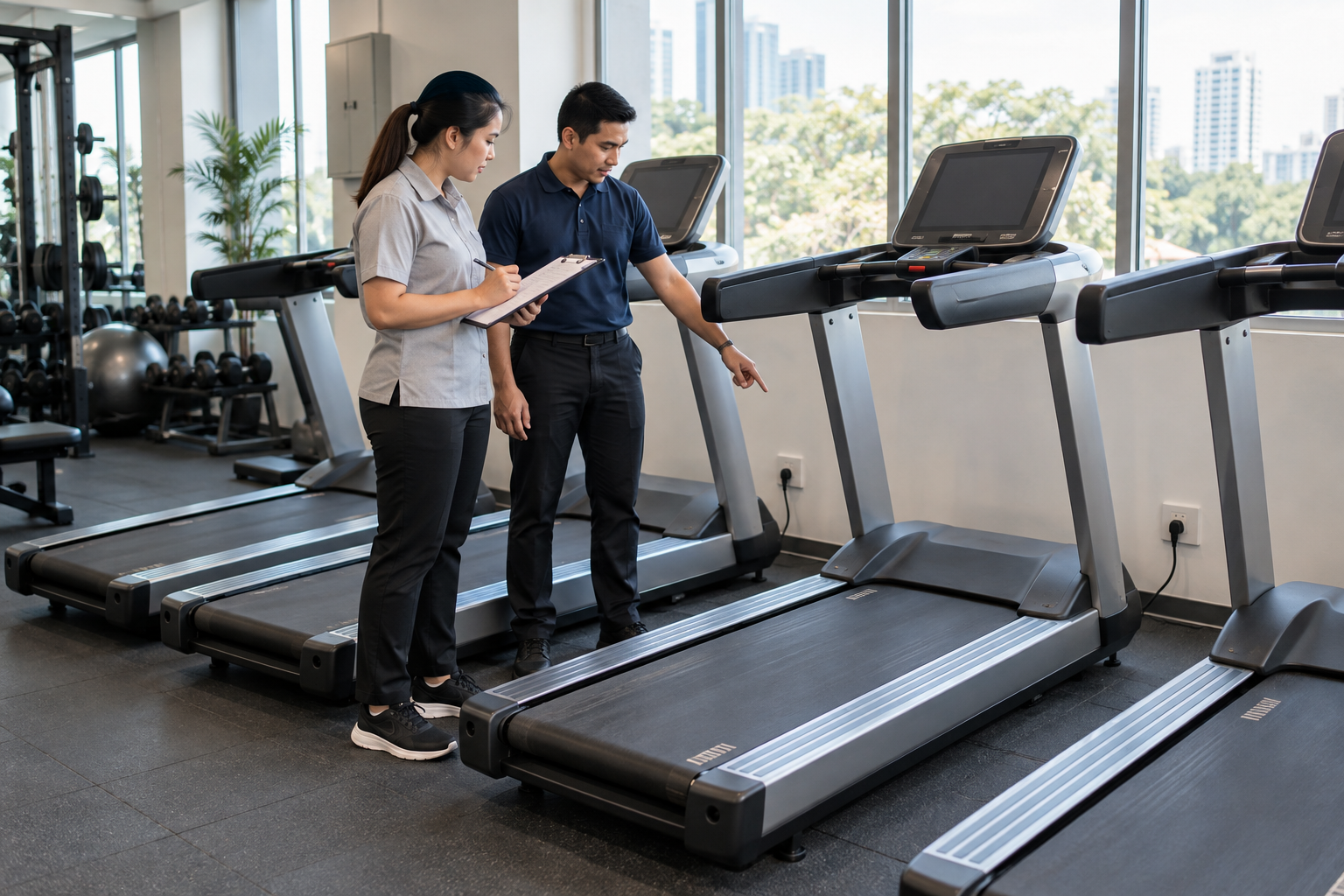
For commercial projects in Malaysia, the safest approach is to plan electrical support machine by machine, not by category alone. This guide explains how to review powered gym equipment requirements, coordinate outlets and circuits, check grounding/earthing, and plan cable routing before installation. It also shows when to involve a qualified electrician and how Desire Gym can help buyers and project teams prepare more confidently.
What are the electrical requirements for commercial gym equipment in Malaysia?
Commercial gym electrical requirements Malaysia are not one-size-fits-all. The correct setup depends on each machine’s manufacturer manual, its power draw, and how it will be integrated into the facility’s electrical layout by a qualified electrician.
In practice, powered gym equipment may include treadmills, ellipticals, rowers, cable machines with electronic functions, and some strength or recovery units with displays, motors, or charging needs. Other categories may be self-powered or non-motorised, so they may have different or minimal electrical needs. That is why the machine label alone is not enough; the model documentation should be checked before outlets and circuits are fixed in the floor plan.
For a commercial gym electrical planning process, buyers should confirm where each machine will sit, where the power outlet will be reached, and whether the load can be shared safely with other equipment. Long extension runs, blocked wall access, or last-minute repositioning can create cable routing issues and service delays. The better approach is to map power points early so the installation team can align the layout with real operating needs.
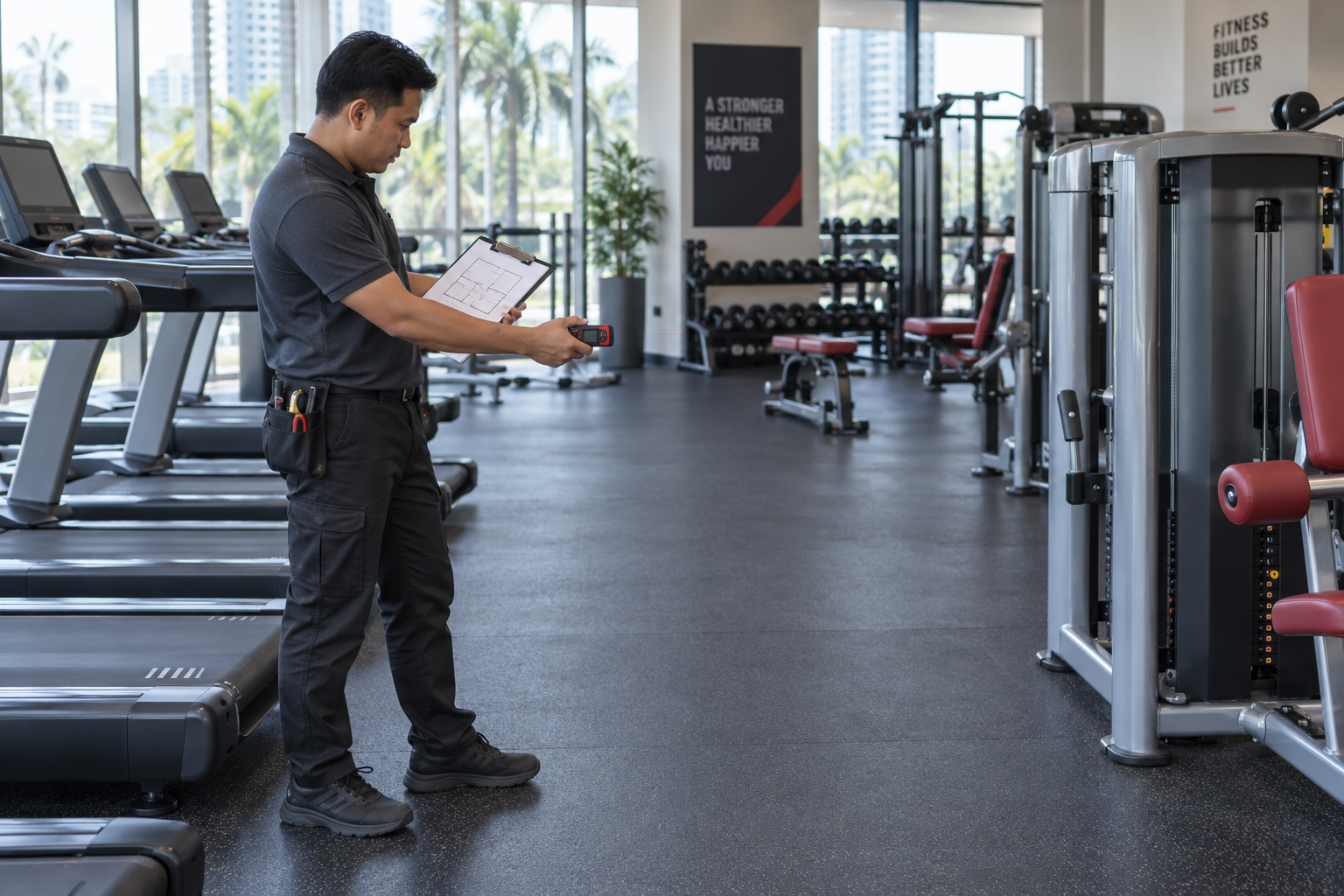
Grounding/earthing also matters because it supports safer operation and helps reduce electrical noise or equipment instability. The same applies to console/network needs: some machines may need data or network access for tracking, software updates, or connected consoles, while others may not. These requirements should be confirmed from the manufacturer manual rather than assumed across an entire product category.
Malaysia buyers should also involve a qualified electrician before installation, especially when multiple powered machines will run in the same zone. In Malaysia, the Suruhanjaya Tenaga is the national energy regulator, and facility teams should use current local rules and professional advice when planning electrical work (Suruhanjaya Tenaga, 2026). As a practical rule, the safest path is to align the equipment list, floor plan, and electrical drawings before purchase and delivery.
For buyers comparing models, Desire Gym can help coordinate equipment selection with the installation plan so the team can place orders with more confidence. If you are preparing a new facility or upgrading an existing one, Add to cart / WhatsApp to know more after confirming the machine manual and electrical layout.
Which powered gym equipment needs electrical planning?
Powered gym equipment usually needs electrical planning when it has a motor, console, display, charging function, or connected features that depend on stable power. In practice, the exact needs vary by model, so buyers should confirm each machine’s manufacturer manual and plan with a qualified electrician before installation.
Powered equipment categories
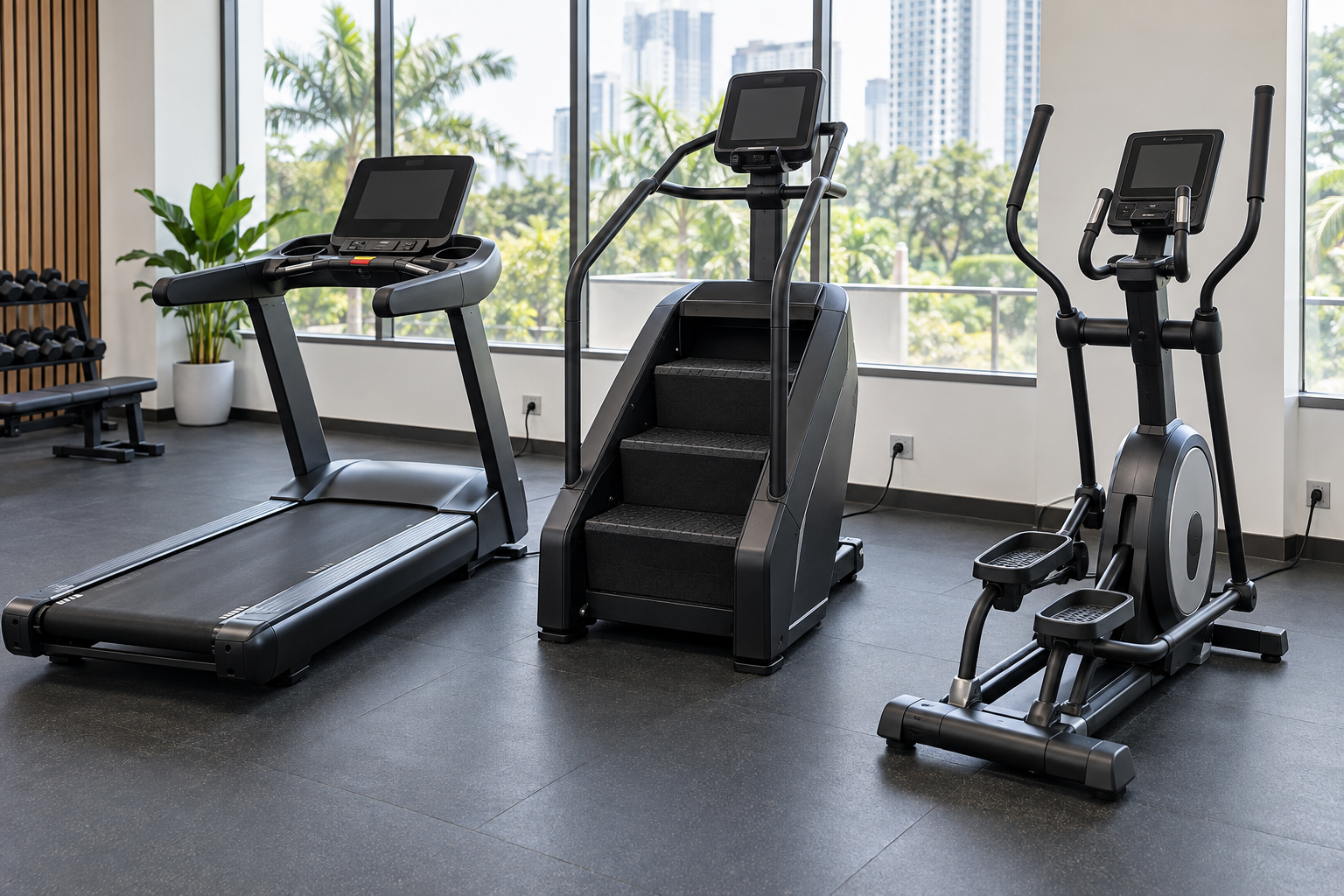
Common powered categories include treadmills, many commercial strength machines with electronic adjustment, ellipticals, stair climbers, rowers with digital consoles, and some recovery or accessory systems. Some bikes and cross-trainers may also need power for resistance control, display functions, or connectivity, while others may run with limited external power only for the console. For buyers shortlisting options, Commercial GYM Equipment can help align equipment choice with the facility layout.
| Equipment type | Typical planning need | Buyer should confirm before installation |
|---|---|---|
| Motor-driven cardio | Outlet access, circuit planning, cable routing | Manual power specs, plug requirements, start-up load |
| Console-based machines | Stable power for display or tracking features | Whether power is needed continuously or only for the console |
| Connected equipment | Possible network or data access | Data ports, Wi-Fi needs, software update method |
| Heavy-use commercial units | Better load distribution across the room | Number of machines per zone and electrician review |
Self-powered or non-motorised equipment
Some equipment may not need a direct wall connection for operation. This can include air bikes, curved/manual treadmills, sled-style trainers, and other non-motorised cardio or resistance products. Even so, buyers should not assume every machine in this category is fully independent; some models still use a battery, screen, or charging input for tracking and user feedback.
The key point is that self-powered does not always mean no planning. It may still affect outlet location for ancillary devices, layout for data equipment, or cable routing for shared screens and networked systems. In a busy facility, these small details can affect cleaning access, user safety, and long-term maintenance.
Why model type matters
Electrical planning should follow the exact product, not just the product category. Two machines that look similar may have very different power needs, especially when one model includes a console upgrade, incline motor, or connected software. That is why the manufacturer manual is the first reference point, and why the team should confirm grounding/earthing, outlet placement, and overall circuit planning before equipment arrives.
For Malaysia facilities, this also helps the gym and contractor stay aligned with current local safety expectations and Suruhanjaya Tenaga research or guidance where relevant. Desire Gym can support buyers in matching the equipment list to the site plan, so the installation process is smoother and safer.
How should you plan power outlets, circuits, and cable routing?
Plan outlets and circuits from the floor plan first, then confirm cable routes and expansion space before any machine is installed. The safest approach is to match each equipment position to the manufacturer manual and have a qualified electrician verify the layout before work begins.
Outlet location on the floor plan
- Start with the machine layout and identify which units need fixed power, charging, or network access.
- Mark outlet points beside, behind, or near each unit only where the manufacturer documentation allows it, so plugs and cords do not cross walking paths.
- Keep access panels, cleaning paths, and service clearances in mind, especially for larger cardio zones and console-heavy stations.
- Leave room for future layout changes so the gym does not need a full rewire when equipment is moved.
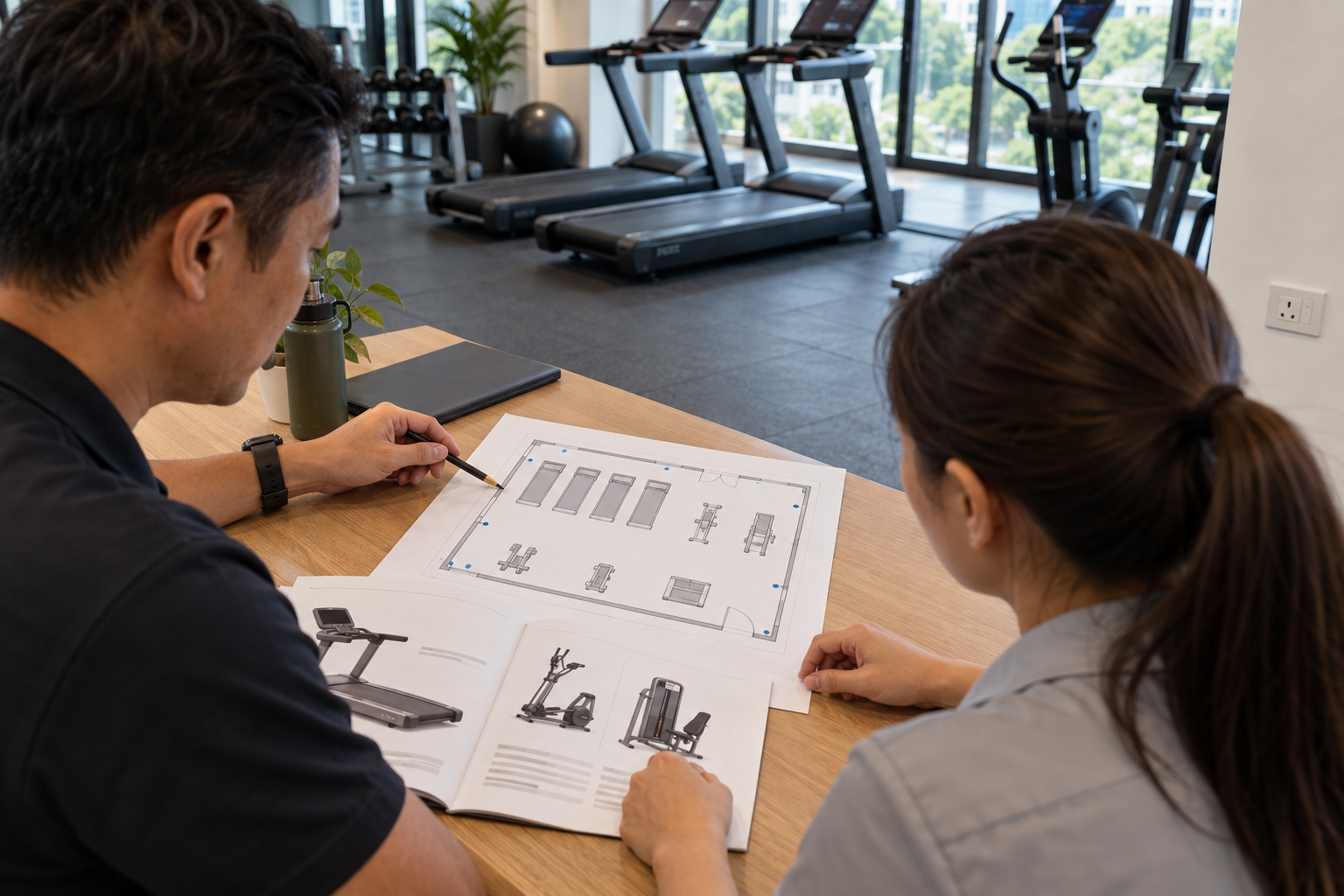
electrician marking outlet positions on gym floor plan In practice, outlet placement should support both the machine and the user flow. For example, powered cardio rows often need a cleaner, more controlled outlet plan than a free-weight area, while connected machines may also need data or network access for performance screens, updates, or member tracking. This is why the planning stage should be tied to the exact model list, not a generic room sketch. The checklist in Gym Equipment Installation Malaysia Checklist can help the team keep this step organised before installation day.
Circuit coordination and load planning
The main rule is to group equipment thoughtfully, not randomly. High-demand machines, grouped screens, and shared charging points should not be placed on the same circuit without a proper load review by the electrician. A mixed-use gym should also allow for spare capacity, because the lineup often changes after opening.
A practical sequence is:
- Review the final equipment list and separate powered machines from lower-demand accessories.
- Map each outlet to a circuit plan that the electrician can balance across the room.
- Confirm where extension use is not appropriate and where dedicated outlets are more suitable.
- Reserve allowance for future additions, especially if the gym expects new consoles, digital displays, or networked accessories.
This is also where commercial gym electrical planning becomes a facility-management task, not just an equipment purchase task. It reduces nuisance tripping, prevents messy cable runs, and makes the space easier to maintain.
Grounding, earthing, and trip-hazard control
Grounding and earthing should be treated as a safety requirement, not an afterthought. The electrician should confirm that the installation approach aligns with the machine manual and the site’s electrical system, while the gym team keeps cables protected, short, and away from traffic areas.
Cable routing should avoid loose leads across aisles, reception paths, and cleaning routes. Use neat wall-side routing, protective covers where necessary, and clear separation from wet areas or high-contact zones. In Malaysia, this is especially important for busy commercial settings where day-to-day traffic can increase wear on exposed wiring.
For buyers comparing powered units and other categories, this planning stage helps the team decide what must sit near an outlet and what can remain more flexible. If you are still matching equipment to the room, Desire Gym can help you shortlist the right models and check the setup details before you add to cart or WhatsApp to know more.
What should you verify in the manufacturer manual and with a qualified electrician?
The manual should tell you the exact power and installation conditions for each model, and a qualified electrician should confirm whether your site can support them safely. For commercial fitness buyers, this is the point where machine selection, outlet placement, and circuit planning must be checked together before installation.
Manual items to check

Review the manufacturer manual for each unit and confirm the following:
- Rated input requirements for that exact model, including whether it is mains-powered or has any separate low-voltage needs.
- Any stated outlet or connection preferences, especially if the unit needs a dedicated supply rather than sharing with general equipment.
- Console, screen, entertainment, or network functions that may need a data point, Ethernet connection, or other accessory connection.
- Start-up or peak-load notes that may affect how the machine behaves when turned on.
- Installation instructions related to spacing, cable entry, and access for servicing.
- Any manual warning about not using extension leads, multi-plug adapters, or shared sockets.
- Earthing, grounding, or protection notes that must be followed exactly as written.
- Service access requirements, because some machines need room for inspection and maintenance after placement.
If you are comparing models while planning a room layout, it helps to look at equipment categories alongside the installation brief. Commercial GYM Equipment can support that shortlist process before final purchase decisions.
When electrician review is needed
Electrical review is needed before ordering if the machine manual is unclear, if multiple powered units will be installed in one zone, or if the room already has limited outlet capacity. It is also needed when the layout includes high-use cardio rows, console-heavy stations, or equipment that may be grouped close together in a commercial setting.
A qualified electrician should assess whether the planned outlet positions, load distribution, and protective measures suit the site. This is especially important for projects that need a clean finish, because electrical changes are easier to coordinate before flooring, mirrors, and equipment delivery are completed.
Questions to raise during site inspection
During the site visit, ask the electrician to confirm:
- Which machines need their own outlets or dedicated circuits, based on the manuals.
- Whether the existing distribution can handle the planned powered equipment mix.
- Where outlets should sit so machines can be positioned without stretching cables.
- How grounding or earthing will be checked against the building’s electrical setup.
- What cable routing method will keep leads protected and away from traffic.
- Whether console, TV, or network connections should be prepared at the same time.
- What should be verified again on delivery day if the final machine list changes.
For Malaysian buyers, this is where practical planning protects both safety and usability. If you need help matching equipment choices with the room layout, DesireGYM can help you review the options and you can add to cart or WhatsApp to know more.
What information should you prepare before asking for a quotation?
If you want an accurate quotation for commercial gym electrical planning, prepare the equipment list, room layout, and the machine manuals first. The clearer the information, the easier it is for the provider and a qualified electrician to confirm what needs power, where outlets should go, and what site work may be required.
Which equipment details should I share first?
List every powered machine by model name if possible, then note how many units you want. Include whether each item is a treadmill, bike, elliptical, strength machine with electronics, TV-linked console, or another powered device. If you have not chosen models yet, share the intended mix so the quotation can be based on real use rather than guesswork.
What room information helps the quotation most?
Provide the floor plan, ceiling height, wall locations, and where the equipment will sit in the room. Add photos of the space and mark existing outlets, lighting points, columns, doors, and traffic paths. This helps the team think about cable routing, outlet positions, and safe machine placement before installation day.
What electrical information should be included?
State whether the site already has a suitable supply and whether there are any known limits from the building side. If available, share the latest electrical inspection records, the existing panel layout, and any notes from the site manager or electrician. This is especially useful when planning grounding/earthing, circuit distribution, and other protective details.
Should I include console or network needs?
Yes. If your machines need app connectivity, TV input, Wi‑Fi, Ethernet, or media integration, mention that early. Console and network needs can affect how the space is prepared, especially if you want a cleaner finish without loose leads across the gym.
What else should be checked before requesting a quote?
Ask whether the quotation should include coordination with flooring, mirrors, or delivery timing. A simple pre-quotation checklist such as Commercial GYM Equipment can also help you group the site details in a logical way before you compare options.
For buyers in Malaysia, the safest next step is to gather the manuals, room photos, and machine list, then ask DesireGYM for a practical review. Add to cart or WhatsApp to know more, and the team can help you move from planning to purchase with more confidence.
Frequently Asked Questions
What are the commercial gym equipment electrical requirements in Malaysia?
Which gym equipment usually needs power and which may not?
How should outlets and circuits be planned for a gym fit-out?
Why are grounding, earthing, and cable routing important in a commercial gym?
Do commercial gyms need to think about surge protection or network connections?
References
- Suruhanjaya Tenaga (Energy Commission of Malaysia), *Guidelines for the Approval of Electrical Equipment (2024 Edition)* — Suruhanjaya Tenaga (Energy Commission of Malaysia), *Guidelines for the Approval of Electrical Equipment (2024 Edition)*
- Suruhanjaya Tenaga (Energy Commission of Malaysia), *Installation* — Suruhanjaya Tenaga (Energy Commission of Malaysia), *Installation*
- Suruhanjaya Tenaga (Energy Commission of Malaysia), *Non-Domestic Electrical Installation Safety Code* — Suruhanjaya Tenaga (Energy Commission of Malaysia), *Non-Domestic Electrical Installation Safety Code*
- Suruhanjaya Tenaga (Energy Commission of Malaysia), *Guideline for the Design, Installation, Inspection, Testing, Operation and Maintenance of Water Heater Systems* — Suruhanjaya Tenaga (Energy Commission of Malaysia), *Guideline for the Design, Installation, Inspection, Testing, Operation and Maintenance of Water Heater Systems*
- Department of Occupational Safety and Health Malaysia, *Portal Rasmi Jabatan Keselamatan Dan Kesihatan Pekerjaan* — Department of Occupational Safety and Health Malaysia, *Portal Rasmi Jabatan Keselamatan Dan Kesihatan Pekerjaan*