
How to Read a Commercial Gym Equipment Spec Sheet
A commercial gym equipment spec sheet is a buying reference that lists the equipment dimensions, footprint, product weight, maximum user weight, resistance system, motor or drive system where relevant
Quick answer
A commercial gym equipment spec sheet is a buying reference that lists the equipment dimensions, footprint, product weight, maximum user weight, resistance system, motor or drive system where relevant, power requirement, adjustment range, intended-use rating, service clearance, and warranty terms so buyers can judge suitability, compare models, and verify whether the machine fits their facility and training needs.
Key Takeaways
- Focus on intended-use rating first, then confirm dimensions, footprint, and service clearance.
- Compare product weight, maximum user weight, resistance system, and motor or drive system only for the right equipment category.
- Check adjustment range, power requirement, included accessories, and warranty terms before shortlisting.
- Use the spec sheet to compare models side by side and verify details with Desire Gym or DesireGYM in Malaysia.
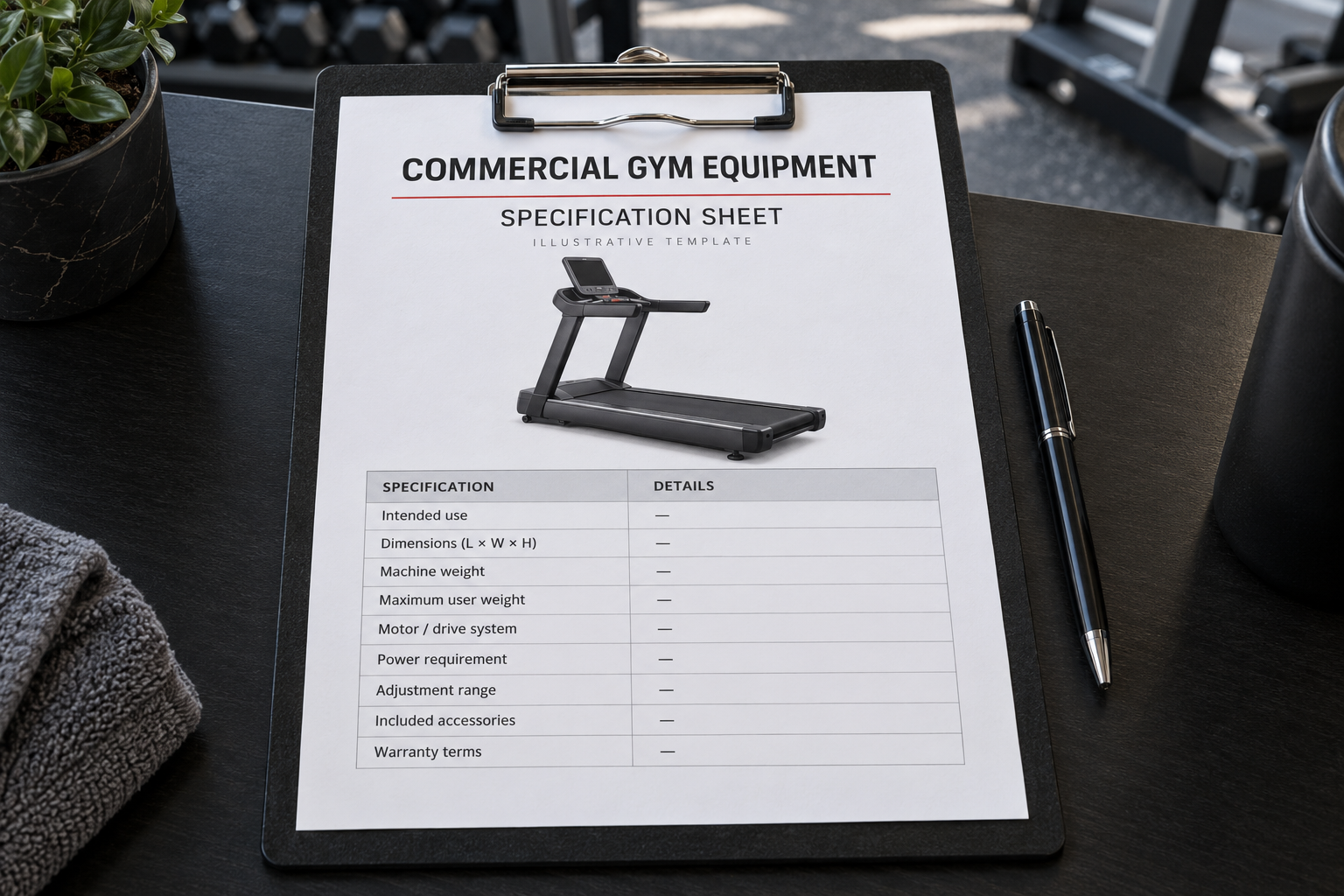
Reading a commercial gym equipment spec sheet correctly helps Malaysian buyers avoid costly mistakes and choose equipment that suits the space, training purpose, and user profile. This guide explains how to separate practical commercial gym equipment specifications from marketing language, including dimensions, footprint, product weight, maximum user weight, resistance system, motor or drive system, power requirement, adjustment range, service clearance, and warranty terms. You will also learn how to compare models properly before requesting a quotation or finalising a shortlist with Desire Gym.
What is a commercial gym equipment spec sheet?
A commercial gym equipment spec sheet is the product document that lists the measurable details of a machine so buyers can judge whether it fits the facility, training purpose, and budget. For a buyer at Desire Gym, it is the fastest way to compare models and verify whether the equipment is suitable before requesting a quotation or placing an order.

Purpose of the spec sheet
The main purpose of a commercial gym equipment spec sheet is to turn a sales listing into procurement information. It usually shows the model name, intended-use rating, equipment dimensions, footprint, product weight, maximum user weight, resistance system or motor/drive system, power requirement, adjustment range, included accessories, and warranty terms.
That matters because different equipment categories use different core specs. A treadmill sheet may focus on motor power, running deck size, and electrical needs. A strength machine sheet may focus more on resistance system, adjustment range, and frame construction. Benches, racks, and cable systems often rely on dimensions, footprint, product weight, load limits, and included accessories instead of motor details.
In practice, the sheet helps a buyer answer simple questions: Will the machine fit the room? Will it suit the expected users? Does it need a power point? Does the warranty cover commercial use in Malaysia? The best sheets also support a direct model comparison, so you can place two or three units side by side without relying on a single headline number.
If you want a deeper walkthrough, you can also refer to Gym Equipment Spec Sheet: How to Read It for a structured buying guide.
How to separate facts from marketing language
A good sheet contains facts that can be measured or verified. Marketing language uses broad claims such as “heavy duty,” “premium,” or “professional grade” without proving what that means. Buyers should look for numbers, ranges, and named components instead of vague promises.
For example, “smooth motion” is a claim, but a stated resistance system, drive type, or stack weight is a fact. “Compact design” is less useful than exact equipment dimensions and required service clearance. “Suitable for all users” is weaker than a maximum user weight and adjustment range.
When reviewing commercial gym equipment specifications, ask what can be verified on the product page, quotation, or manufacturer document. If the claim is not tied to a model-specific specification, treat it as promotional text, not a buying decision point. For Malaysian buyers, that discipline helps avoid misunderstandings and makes it easier to confirm whether the machine truly matches the space, users, and after-sales expectations of the gym.
Which specs matter most on a commercial gym equipment spec sheet?
The most important specs are the ones that prove fit, safety, and operating cost: intended-use rating, equipment dimensions, product weight, maximum user weight, resistance or motor system, power requirement, adjustment range, included accessories, and warranty terms. These should be checked before any cosmetic feature or sales claim.
Core specs for all equipment
Start with the intended-use rating. It tells you whether the unit is built for light institutional use, full commercial duty, or a specific duty cycle, which affects durability and maintenance expectations. Next, confirm equipment dimensions and footprint, then compare them with your actual room layout plus service clearance so the machine can be used and maintained safely.
Product weight is also important because it often reflects structural stability, while maximum user weight helps you judge suitability for your target members. Adjustment range matters for seat positions, pad settings, handles, and range-of-motion fit, especially when serving different body sizes. Finally, check included accessories and warranty terms so you know what is actually supplied, what is covered, and how long support lasts.
| Spec type | What it means | Why it matters | What to verify |
|---|---|---|---|
| Intended-use rating | Commercial, light commercial, or institutional duty level | Shows whether the unit matches traffic volume | Match the rating to your expected usage |
| Dimensions and footprint | Physical size on the floor | Determines space fit and traffic flow | Compare with room size and service clearance |
| Product weight | Total machine mass | Affects stability and moving requirements | Confirm if assembly or relocation is needed |
| Maximum user weight | Safe user load limit | Important for safety and warranty compliance | Check the listed limit, not an estimate |
| Adjustment range | Seat, pad, handle, or deck settings | Affects user fit and comfort | Test whether settings suit your population |
| Included accessories | Items bundled with the machine | Prevents missing parts at delivery | Verify straps, holders, pins, or attachments |
| Warranty terms | Coverage period and scope | Affects risk and long-term cost | Read parts, labour, and exclusions carefully |
Specs that vary by equipment category
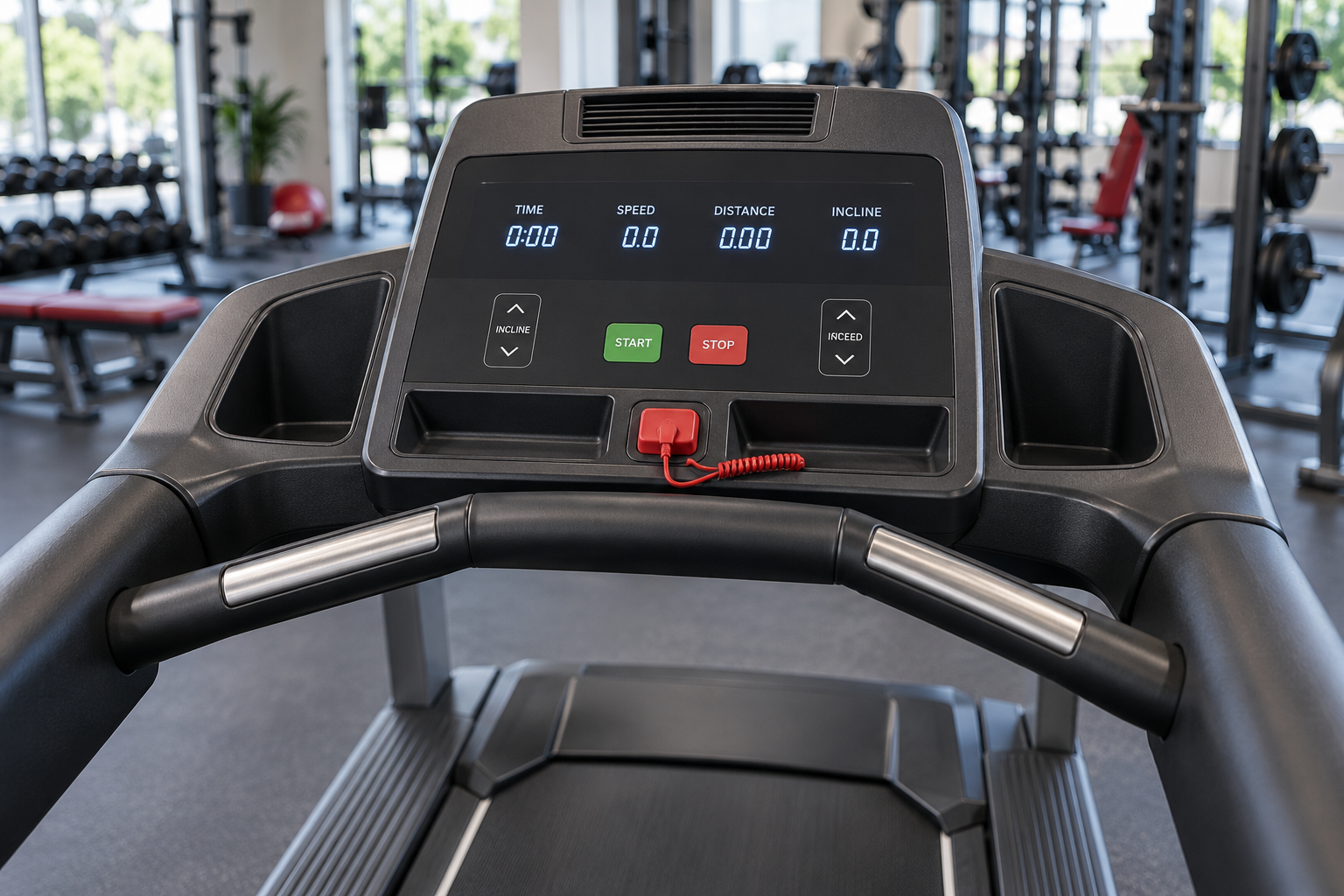
For treadmills and other cardio units, the most important items are motor/drive system, power requirement, console features, and belt or deck details. For bikes and other cardio machines, resistance system and drivetrain design matter more than a headline feature list.
For selectorized strength machines, focus on stack weight, pulley path, cable quality, and adjustment range. For plate-loaded machines and racks, load capacity, frame construction, and starting resistance are usually more useful than electronic features. For benches, cable systems, and multi-station units, buyers should compare stability, attachment compatibility, and user setup range. If you want a category-by-category reference, see Commercial Strength Equipment Malaysia Guide.
What to verify in warranty and service terms
Warranty terms should clearly state what is covered, for how long, and under what conditions. Check whether the warranty applies to parts only or includes labour, whether wear items are excluded, and whether commercial use affects coverage. Also ask who handles service in Malaysia, how spare parts are supplied, and whether installation or on-site support is included.
A strong sheet should also explain service clearance needs, because maintenance access is part of real ownership cost. For a buyer comparing options, this is where the difference between a low sticker price and a reliable purchase becomes clear. In practice, the best choice is the model that matches your space, users, and support needs—not just the one with the biggest headline number.
How do you compare two gym models without relying on one headline number?
The safest way is to compare each model as a complete package: intended use, size, weight, load or resistance, power, adjustability, and support terms. One strong-looking number rarely tells you which unit will fit your space, users, and operating budget better.
Avoid comparing only one metric
A higher maximum user weight or a bigger motor does not automatically make a machine the better buy. A treadmill with a stronger drive system may still lose if it needs more floor space, more power, or more service clearance than your room can support. Likewise, a strength machine with a heavier frame may be stable, but it is not necessarily better if its movement path does not suit your users.
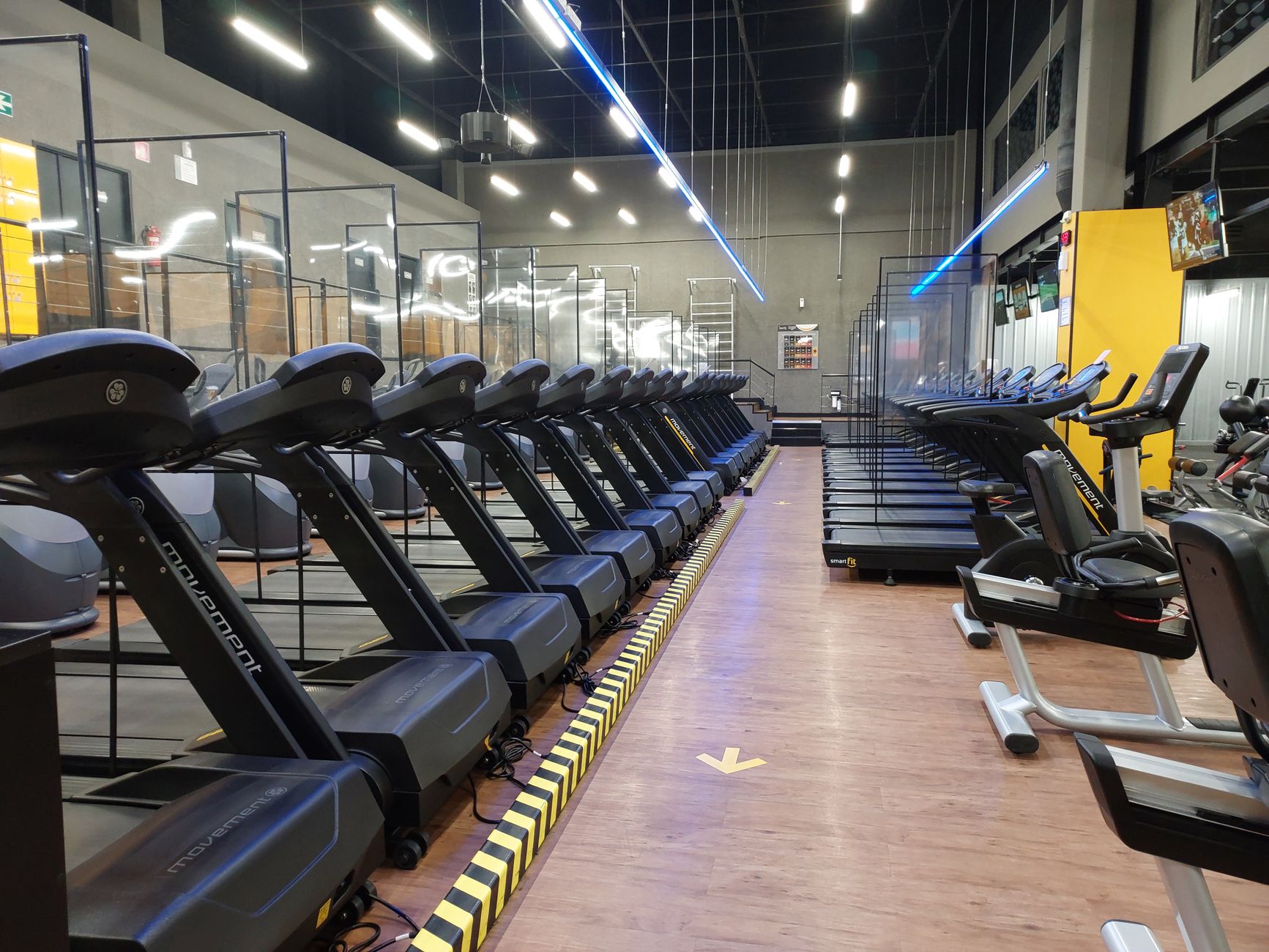
To compare fairly, rank the models against the same use case. For example, if you are choosing between two treadmills, look at walking surface size, deck and motor specification, electrical requirement, and warranty terms together. If you are choosing between two strength units, compare resistance system, adjustment range, included attachments, and frame size as a set, not separately. The goal is to judge real fit, not marketing strength.
Use a full spec-to-use-case checklist
- Match the intended-use rating first. A model designed for light club use should not be treated the same as one built for continuous commercial traffic.
- Compare the physical fit next. Check equipment dimensions, footprint, and the clearance needed for safe operation and maintenance.
- Review the operating system. For cardio, that means resistance system or motor/drive system and any power requirement. For strength, it means load path, stack, or plate-loading setup.
- Check user fit details. Look at maximum user weight and adjustment range so the machine suits your target population.
- Confirm what comes with the unit. Included accessories can change the real value of the offer, especially for benches, racks, and cable stations.
- Finish with warranty terms and local support. A slightly higher price can be justified if service response, parts access, and coverage are stronger in Malaysia.
For example, if one model has a smaller footprint but a shorter warranty and weaker service coverage, it may cost more over time than a larger unit with better support. That is why buyers at Desire Gym should compare model-specific commercial gym equipment specifications in context, then choose the option that best matches the room, users, and after-sales needs.
What is the difference between product dimensions and service clearance?
Product dimensions are the space the machine physically occupies, while service clearance is the extra room needed around it for safe use, access, and maintenance. A unit can fit on paper yet still be impractical if the surrounding space is too tight.
Footprint versus operating space
The footprint is the base area covered by the equipment when it is placed in position. This is the number to use when checking whether the machine will fit through doors, into lifts, or inside a planned training zone. By contrast, operating space is the area a user needs to move, mount, dismount, adjust settings, and train without obstruction.
For example, a treadmill may have a compact frame size, but the belt travel area, rear safety space, and side access space all matter in a real room layout. A rack may only take up a modest footprint, yet the bar path, plate loading zone, and user movement can require much more usable space than the base dimensions suggest.
This is why buyers should treat room planning as a layout exercise, not just a measurement check. For a local purchase decision, it helps to review a supplier guide like Commercial GYM Equipment and then confirm the final layout against the actual site.
Clearance for installation and maintenance
Service clearance is the space needed for setup, inspection, cleaning, lubrication, part replacement, and emergency access. It is especially important for treadmills, cable machines, selectorized stacks, and any unit with a drive system or moving components.
As a practical rule, the room should allow staff to reach the rear, sides, and control area without moving the machine every time service is required. Many fitness centres also keep extra space behind cardio units so users can exit safely and technicians can open covers or replace parts.
Here is the key point: dimensions tell you whether a machine can be placed in the room, but clearance tells you whether it can actually function well in that room.
If you are comparing options, always ask for both the published equipment dimensions and the recommended service clearance. That is especially useful when checking model-specific listings from Desire Gym or any other supplier, because a tight fit today can become a maintenance problem later. In short, the right setup is one that fits the floor plan, supports safe movement, and still leaves enough space for future service.
How should Malaysian buyers verify spec sheet details before purchase?
The safest approach is to verify the machine’s intended-use rating, dimensions, weight, capacity, resistance or motor system, electrical needs, adjustment range, accessories, and warranty terms against model-specific sources before paying. For Malaysian buyers, that means matching the listing, quotation, and manufacturer documentation line by line so there is no mismatch after delivery.
#